“Real wisdom is not the knowledge of everything, but the knowledge of which things in life are necessary.”

— Leo Tolstoy

Daily Inspiration @rainbowquotes
RainbowQuotes Logo

“Real wisdom is not the knowledge of everything, but the knowledge of which things in life are necessary.”

(September 9 , 1828 -- November 20 , 1910)
Origin: Russian
Known for: Writer
Meaning
Tolstoy defines true intelligence as the ability to discern essential priorities from the infinite noise of the world, rather than the mere collection of facts. This perspective suggests that a cluttered mind is an ineffective one and that mastery comes from focusing on the few things that truly impact our character and contribution. In our modern "knowledge economy," this principle is a crucial tool for productivity, helping leaders and students avoid burnout by practicing radical prioritization. People resonate with this message because it alleviates the pressure to "know it all" and instead empowers them to know what matters. Tolstoy, who was famously educated yet eventually rejected secular academic prestige for moral simplicity, believed that living a good life was the only science worth mastering. To practice this, one should regularly audit their daily inputs and focus their energy on the core tasks and relationships that align with their purpose. It reminds us that depth of understanding in what is necessary is far superior to a shallow grasp of everything.

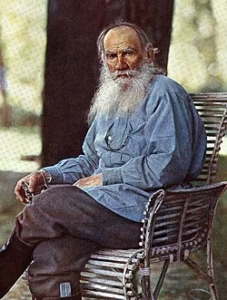
Leo Tolstoy
Author Spotlight

Leo Tolstoy

Leo Tolstoy was a Russian writer and entrepreneur. Their most powerful quotes on life, success and human nature are collected here for daily inspiration and reflection.

Keep exploring

More Quotes on These Topics

From the same voice

More From This Author

Understanding the quote

Frequently Asked Questions

Frequently asked

This quote is attributed to Leo Tolstoy. Leo Tolstoy was a Russian writer and entrepreneur. Their most powerful quotes on life, success and human nature are collected here for daily inspiration and…

Tolstoy defines true intelligence as the ability to discern essential priorities from the infinite noise of the world, rather than the mere collection of facts. This perspective suggests that a cluttered mind is an ineffective one and that mastery comes from focusing on the few things that truly impact our character and contribution. In our modern "knowledge economy," this principle…

The wording and attribution are documented at en.wikiquote.org. Use the original source linked on this page to verify the exact phrasing and context.

Scroll to Top