“If you knew you had to fight for your life tomorrow, would you change your training today?”

— Bruce Lee

Daily Inspiration @rainbowquotes
RainbowQuotes Logo

“If you knew you had to fight for your life tomorrow, would you change your training today?”

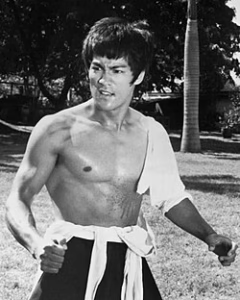
Bruce Lee Bruce Lee
(November 27 , 1940 -- July 20 , 1973)
Known for: Martial Artist
Meaning
This challenging question asks individuals to evaluate whether their current efforts are truly sufficient for the challenges they might face in the future. It touches on a deep strategic urgency, suggesting that we often settle for "good enough" when our survival or ultimate success might require more. In modern professional life, this is a call to take your self-improvement and preparation more seriously, as if your entire career depended on today's performance. People share this today to snap themselves out of complacency and to find the motivation to work with a sense of purpose and intensity. Bruce Lee used this mindset to maintain a level of physical and mental readiness that was far beyond his contemporaries. The practical advice is to audit your current habits and ask yourself if they are truly preparing you for the "fights" or high-pressure situations in your chosen field. This mindset creates a sense of accountability and pushes you to reach a higher level of excellence every day.

Bruce Lee
Author Spotlight

Bruce Lee

Bruce Lee was a Chinese-American martial artist. Their most powerful quotes on life, success and human nature are collected here for daily inspiration and reflection.

Keep exploring

More Quotes on These Topics

From the same voice

More From This Author

Understanding the quote

Frequently Asked Questions

Frequently asked

This quote is attributed to Bruce Lee. Bruce Lee was a Chinese-American martial artist. Their most powerful quotes on life, success and human nature are collected here for daily inspiration and reflection.

This challenging question asks individuals to evaluate whether their current efforts are truly sufficient for the challenges they might face in the future. It touches on a deep strategic urgency, suggesting that we often settle for "good enough" when our survival or ultimate success might require more. In modern professional life, this is a call to take your self-improvement and…

The wording and attribution are documented at en.wikiquote.org. Use the original source linked on this page to verify the exact phrasing and context.

Scroll to Top