If you’ve ever wondered what type of quotes perform best on Instagram and Pinterest, you’re not alone, and the answer isn’t random. While most quote posts get scrolled past in the first second or two, a specific set of styles consistently racks up thousands of saves and repins every week. The accounts behind them aren’t doing anything magical. They’ve figured out that format, topic, and design have to work together for a quote post to earn real traction. Get one of those three wrong and even a powerful line disappears into the feed.
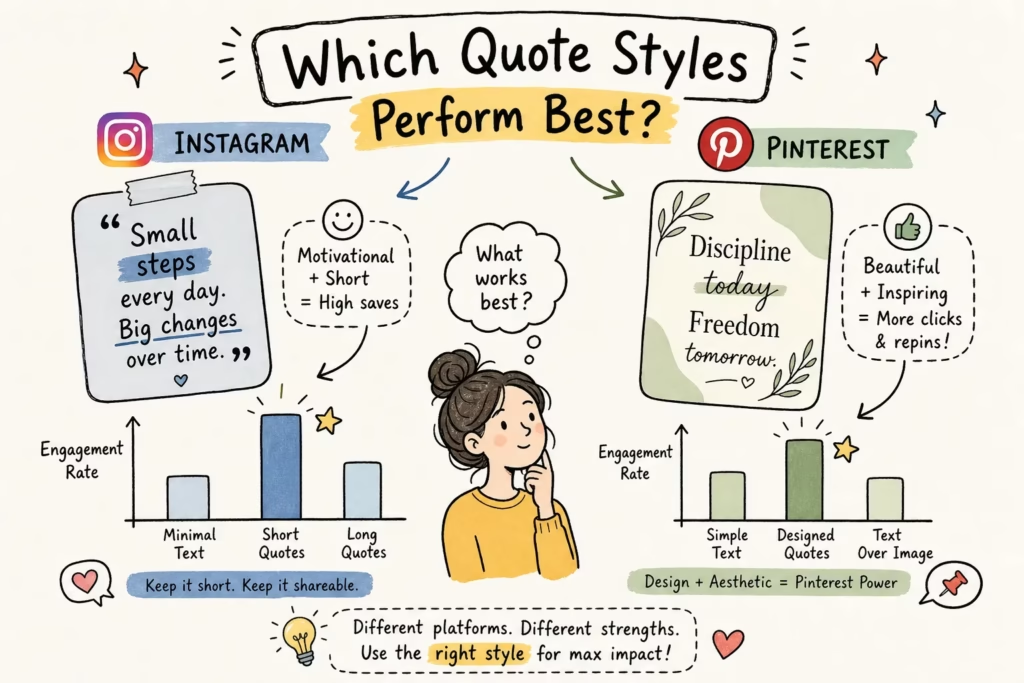
The core thesis is straightforward: on Instagram, brevity and emotional punch win. On Pinterest, searchability and visual clarity drive saves. These platforms have completely different user behaviors, and a quote that crushes it on one can quietly flop on the other. At RainbowQuotes, an inspirational quotes platform organized by mood, topic, and author, patterns in what actually resonates become impossible to ignore once you’re working across a broad library of content. Volume reveals what works, and what looks good on paper but underperforms in practice.
This article covers five areas: length, topic, design, platform-specific rules, and how to test your findings quickly. By the end, you’ll have a clear framework for building quote posts that earn saves instead of scrolls.
What type of quotes perform best on Instagram and Pinterest: length first
Format length is the first decision, and it’s platform-dependent. Instagram and Pinterest behave very differently, and treating them the same way is one of the most common mistakes quote creators make. Each platform has its own logic, and the patterns point clearly in one direction for each.
Short vs. long quotes: which type works best on Instagram
Short, punchy quotes work on Instagram because the platform is built for fast-scrolling. Very short one-liners, ideally just a few words on the image itself, tend to deliver a complete emotional hit before the thumb moves on. Instagram captions truncate at around 125 characters, which means anything past that point requires an extra tap. Fewer users expand truncated captions, so it pays to prioritize those first 125 characters. Instagram character limit
The sweet spot for Instagram caption length sits between 138 and 150 characters. That gives you enough room to place the quote and a short follow-up prompt without risking the “more” click. More importantly, saves and shares carry more weight in Instagram’s algorithm than likes do, and one-liners trigger that “save for later” instinct far more reliably than multi-line quotes. A short, memorable line feels like something worth keeping. A long block of text feels like something to read later, which usually means never. For practical tips on crafting that first line and structuring captions that convert, see this guide to Instagram caption best practices.
When longer, reflective quotes outperform on Pinterest
Pinterest users aren’t browsing for entertainment; they’re searching with intent. They’re building boards around a specific emotion, life chapter, or goal, looking for content that matches exactly what they have in mind. A reflective, two-to-three line quote tied to a specific situation, such as grief, ambition, or a relationship ending, tends to perform well because it gives Pinterest’s algorithm more to index and more to match against user searches.
The card can carry more text than an Instagram post would tolerate, as long as the topic is precise. A quote about “the courage to start over” will get saved by someone actively searching for encouragement after a setback. Specificity is the ranking signal on Pinterest, not brevity. Pairing a slightly longer quote with a keyword-rich description of around 200 characters gives the platform strong relevance signals to work with, improving the chances your pin reaches the right person. For deeper context on how Pinterest treats search and ranking, read about how the Pinterest search algorithm works.
Quote topics that earn the most saves and shares
Choosing the right topic matters as much as getting the format right. Not all themes perform equally, and the gap between top-performing categories and average ones is significant. Knowing which topics your audience actually saves gives you a head start before you design a single post.
Motivation, self-growth, and mindset shifts
Motivational and self-growth quotes consistently generate high engagement on Instagram, especially with creators, students, and entrepreneurs. Action-oriented lines that create urgency or challenge conventional thinking tend to spark strong comment sections on top of saves. Contrarian quotes work particularly well because they invite debate: a line like “You don’t need more time, you need more focus” makes people either strongly agree or strongly disagree, and both reactions drive shares.
Mindset-shift quotes also outperform because they feel personally relevant. When a quote reframes how someone sees a problem they’re currently living, they save it immediately. These categories align naturally with RainbowQuotes’ mood-based browsing filters. Users can search by moods like “motivated” or “focused” to find quotes that match exactly where they are mentally right now. That kind of precision browsing cuts out the noise of scrolling through broad topic lists. For ready-made caption examples in this niche, check out Most Engaging Motivational Quote Captions for Instagram Growth, RainbowQuotes.
Love, healing, and emotional resonance
Love quotes and healing content are among the most save-worthy categories on Pinterest, where people build boards around relationships, recovery, and self-care. These quotes are saved privately, not to impress an audience but because the words capture something personal. That behavior makes them extremely high-save content, even if they don’t generate the same comment volume as motivational posts.
Wellness and self-care quotes are gaining ground as audiences pull back from pure hustle content and look for balance-focused messages instead. On Instagram specifically, funny and relatable quotes pull strong likes and tags, making them worth rotating into your content mix. A good testing strategy includes at least one humor-leaning post per week alongside your motivational and healing content, so you can see which tone your specific audience responds to most.
Design choices that make people stop scrolling
A powerful quote in a bad design will underperform. Visual presentation is half the equation, and the two biggest variables are typography style and background treatment. You don’t need a design degree to get this right, you need to match the visual energy to the emotional weight of the words.
Bold typography vs. minimalist layouts
Bold, high-contrast typography communicates confidence and gets read instantly while scrolling. Clean sans-serif fonts like Montserrat or Open Sans, set in white against a dark background, work well for motivational and action-oriented quotes. Minimalist designs with generous whitespace and a single elegant font signal calm and depth, and they tend to attract saves from audiences who value aesthetic as much as content. If you need font ideas, this list of stylish fonts for social media graphics is a helpful starting point.
Neither approach is universally better. The right choice depends on what the quote is actually saying. A call-to-action quote about discipline or ambition wants bold, high-contrast treatment. A grief quote or a healing reflection lands better with a soft, airy layout and a lighter color palette. The mental rule: match the visual energy to the emotional weight of the words. When those two things are aligned, the post feels cohesive in a way that audiences respond to without being able to explain why.
Text-on-photo vs. solid color quote cards
Text-on-photo designs can look dynamic and eye-catching, but they carry a real risk: if the image competes with the words, the quote loses. Legibility issues on mobile screens, where most quote content gets consumed, can undermine an otherwise great post. Solid color backgrounds tend to improve legibility and can feel more shareable because they’re cleaner and more brand-neutral, though the best way to know for sure is to test both formats with your own audience.
On Pinterest, vertical cards with a single quote and clean author attribution are generally easy to read as small thumbnails in search results, which matters when someone is scanning a grid of pins. If you want to find out what resonates, post the same quote in both formats, one text-on-photo and one solid background, and compare save counts at the seven-day mark. The data will tell you what your audience prefers far faster than any general advice can.
Platform-specific formatting rules that actually move the needle
Instagram and Pinterest operate on completely different logic. What earns reach on one platform can actively suppress performance on the other. These aren’t just preferences, they’re structural differences in how each platform distributes content. Understanding them is part of what determines what type of quotes perform best on Instagram and Pinterest for your specific account.
Instagram captions: length, structure, and the first line
The first 125 characters of an Instagram caption are visible without any extra action from the reader. That window is the most valuable real estate in your post, and it should contain your strongest line. Place the quote or the most emotionally resonant phrase right there, before the truncation point cuts the rest off. If you’re using a short quote followed by a prompt, something like “Save this for when the hard days come”, keep the whole thing under 150 characters to maximize engagement without requiring an extra tap.
Hashtags in the caption body can disrupt the clean, intentional feel of a quote post. A commonly recommended approach is to place them in the first comment or at the very end of the caption, well after the main content. Your primary focus should be the first line, because that’s the only line most people will ever read.
Pinterest descriptions and SEO titles that drive distribution
Pinterest works like a visual search engine, and its approach to hashtags has changed significantly. The platform now officially discourages hashtag use because they’re associated with spam behavior and can actively suppress pin reach. The strategy that works instead is keyword-rich descriptions written in plain, readable sentence form. For practical guidance on choosing the right keywords and avoiding over-reliance on hashtags, see this resource on Pinterest keywords and hashtags.
Use one to three specific keywords naturally in both your pin title and description. Best quote captions for niche topics, like “motivational quotes for self-growth” or “healing quotes for hard times”, will outperform generic titles like “inspiring words” in search distribution. An SEO-friendly title like “Motivational quote about resilience” tells Pinterest’s algorithm exactly what to index and who to show it to. That relevance match is what turns impressions into saves.
How to find, format, and test quote posts faster
Knowing what works is only useful if you can act on it without spending hours sourcing quotes and building graphics from scratch. The gap between insight and execution is where most creators stall, and closing that gap is what separates consistent posters from occasional ones.
Using RainbowQuotes to source and share quote images quickly
RainbowQuotes is built to move you from idea to post in under a minute. The mood-based browsing lets you filter by categories like “motivated,” “healing,” or “hopeful,” so you can find quotes that match a specific audience or content theme without scrolling through hundreds of unrelated lines. Once you’ve found the right quote, the save-as-image feature formats it as a shareable graphic, ready for Instagram or Pinterest without any additional design work. Learn more about creating Shareable Quote Images: Grow on Social Media Fast Now.
One-tap sharing tools send content directly to Instagram, Pinterest, or Facebook, which eliminates the biggest time barrier for creators who are testing multiple formats in a single week. With a broad library spanning hundreds of topic categories, rotating through fresh, high-quality content week after week is straightforward. Running out of strong material isn’t a problem you’ll hit.
A simple way to test which quote style works for your audience
Testing doesn’t have to be complicated or time-consuming. Post one short one-liner and one reflective multi-line quote in the same week, both on the same topic. At the seven-day mark, check saves and shares, not likes. Saves signal “this matters to me” and shares signal “my audience needs this.” Likes are validation; saves and shares are the metrics that actually indicate long-term content performance.
Whichever format earns more saves wins that round. The following week, repeat the test with two different topic categories. After four weeks of this, a clear pattern will emerge around what your specific audience responds to, and you’ll have data to back it up rather than guessing. RainbowQuotes’ topic library makes rotating through themes straightforward, so each week’s test uses fresh content without repeating yourself. For caption ideas to pair with your tests, explore Caption Inspiration: 40 Quotes to Boost Social Posts.
The formula is learnable, now use it
What type of quotes perform best on Instagram and Pinterest isn’t a mystery. It’s a learnable formula: the right length for each platform, the right topic for your audience, and the right visual treatment for the emotional weight of the words. Short, punchy quotes paired with bold typography drive saves on Instagram. Specific, emotionally resonant quotes with keyword-rich descriptions win on Pinterest. Start there, and let the data refine your approach week by week.
The fastest way to put these insights into practice is to work with a platform that’s already done the curation work. At RainbowQuotes, quotes are organized by mood, topic, and author, ready to save as images and share in one tap across every category that performs. You know what works now. Go post it.